

Facial cleansing is one of the three essential steps in skincare (along with moisturizing and sun protection). It removes sebum, dirt, and product residue without drying out the skin. Proper cleansing can significantly improve the success of your skincare routine.
This article will address the following questions:
- Does cleansing destroy the skin barrier?
- What role do surfactants play in cleaning products?
- What does proper facial cleansing look like in a skincare routine ?
- Which cleanser is the best?
- What is double cleansing ?
- Should you use an exfoliating cleanser ?
There are a few things to keep in mind when cleaning, first and foremost:
"Clean better" is not the same as "Clean more powerfully"
More intensive cleansing isn't necessarily better. Some people achieve better results by cleansing their skin more gently than before. This can even be true for blemished skin! A damaged, compromised skin barrier can promote breakouts and impurities.
Does cleansing destroy the skin barrier?
Cleansers contain surfactants, also known as cleansing agents . These can bind to both oily and aqueous substances, thus cleansing our skin. They should be strong enough to remove unwanted residues such as makeup, SPF (sunscreen), etc., but at the same time gentle enough not to irritate our skin barrier.
How can I tell...
...that my cleanser is gentle enough for my skin type? One method is to wait 5-10 minutes after cleansing, instead of immediately applying moisturizer, and observe how your skin feels . Does it feel tight? Dry? Does it feel like it needs moisturizer? If so, you should perhaps consider a gentler cleanser . You can also try using less product when cleansing.
What role do surfactants play?
Is there any way to identify mild cleansers by their ingredients ? Unfortunately, only to a limited extent. While there are indeed more and less harsh surfactants, it always depends on the overall formulation . The concentration of the surfactants is unknown, and even harsh surfactants can be softened by combining them with milder surfactants. Furthermore, soothing substances such as panthenol may be included, which also contribute to skin compatibility. Fragrances, on the other hand, can increase the potential for irritation for allergy sufferers. Natural surfactants are not necessarily milder; soaps made from plant-based fatty acids are actually particularly harsh due to their high pH value. Just because "coco" is listed in the ingredients doesn't mean a surfactant is mild.
Rather harsh:
- Sodium Lauryl Sulfate
- Sodium Laureth Sulfate
- Sodium Cocoate
- Sodium Palmate
- Sodium Oleate
Rather mild:
Signal words such as
- "Betaine",
- "Glucoside" or
- "Ampho" pay attention
e.g. Disodium Coco- Ampho diacetate

Photo: by John Thomas via Unsplash
What does cleaning look like in your routine?
Morning:
Morning cleansing is optional . Oily skin might appreciate getting rid of excess sebum from the night. Dry skin can also skip cleansing in the morning or simply cleanse with water . It's especially worth a try for irritated skin.
At evening:
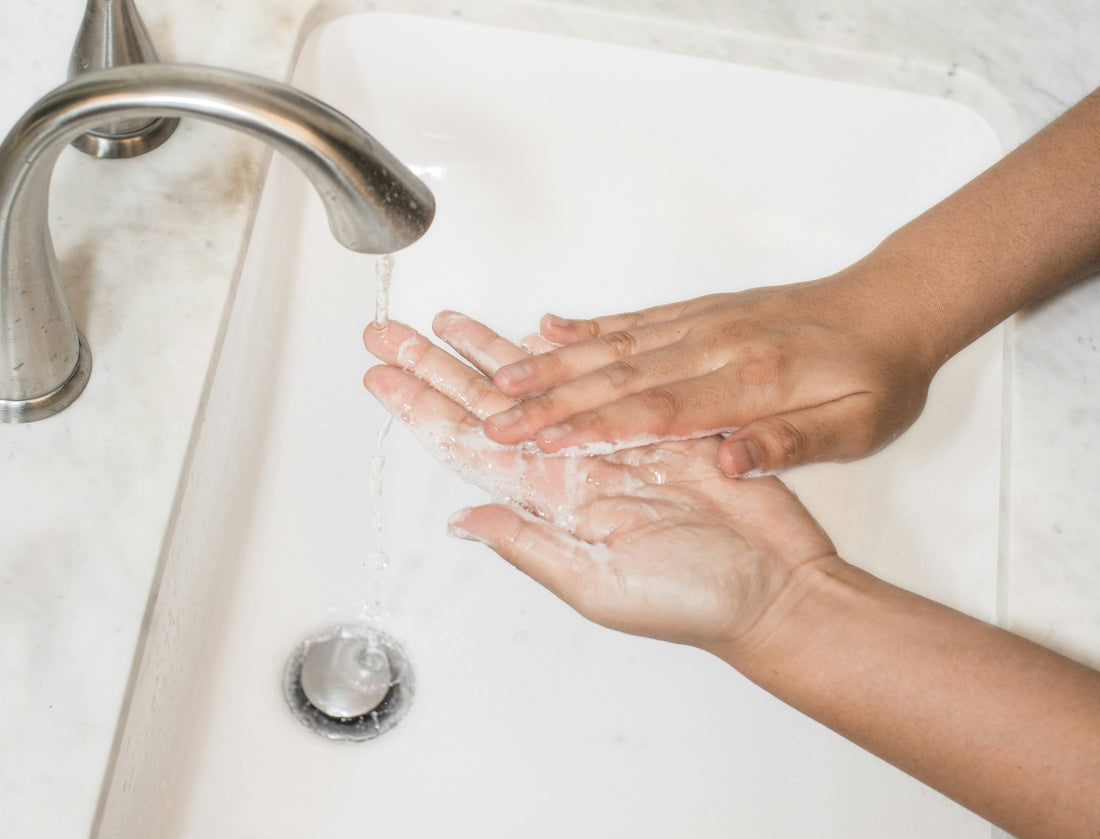
Daily cleansing should be part of your skincare routine. It's especially beneficial in the evening, as this removes dirt, makeup, and sunscreen for the night.
The same product can be perceived differently by different people, ranging from mild to harsh. Reviews and routines from people with similar skin types can certainly provide guidance.
Which cleanser is the best?
Gel, mousse, balm, milk... There are so many types of cleansers . It's easy to lose track. They all have their pros and cons, but I'd go with whichever texture you enjoy most :)
Water-based:
This includes most commercially available cleansers, such as cleansing gels or foams (first ingredient: Aqua ). Foams are generally milder than gels, as smaller amounts are automatically used.
Oil-based:
This includes cleansing oils, balms, jellies , etc. The advantage is that the oil itself can dissolve products on the skin, thus requiring fewer surfactants . These are only needed to ensure they can be rinsed off with water and are therefore often gentler on the skin than water-based cleansers with the same cleansing power.

Photo: by Brittney Wang via Unsplash
What about double cleansing?
Ever heard of it? This Korean trend involves using two cleansers one after the other in the evening:
- First, an oil-based cleanser.
- then an aqueous cleanser
Is that necessary?
As always: It depends on.
Especially if you wear a lot of make-up, this can be a method to remove everything relatively gently and without residue, without having to mechanically "scrub".
Caution: Pure oils (e.g., olive oil) are not cleansers! They cannot be rinsed off with water and remain on the skin. There are oils for double cleansing that do not contain surfactants themselves. A second cleanser is absolutely necessary afterward. However, most oil cleansers on the European market also contain surfactants, making them suitable for use on their own.
Exfoliation with cleansers?
Yes, a grain scrub can feel very pleasant. However, we should generally minimize mechanical irritation to protect the skin barrier . Sharp-edged exfoliating grains can cause tiny injuries and provide entry points for microbes and allergens. Therefore, if you're going for a mechanical scrub, opt for jojoba oil beads rather than sea sand or nutshells.
Better to use chemicals?
Chemical peels offer a gentler alternative. They can remove dead skin cells (AHA) and unclog pores (BHA). They are available as leave-on products (e.g., serums) as well as rinse-off cleansers.
Do active ingredients in cleansers actually do anything? This applies to both chemical peels and other active ingredients: sometimes they are wasted down the drain, but often they are also a good way to gently introduce the skin to the effect (short contact method).
Conclusion:
Gentle cleansing is an essential step in skincare to remove sebum, dirt, and product residue without drying out the skin. The cleansing product should be gentle on the skin barrier . Cleansing is a must in the evening skincare routine, while it's optional in the morning. When choosing a cleanser, you can decide based on your preferred texture. Double cleansing can be beneficial for some, especially those wearing a lot of makeup and sunscreen. If you want to incorporate exfoliation into your cleansing routine, opt for gentle chemical peels. Happy face-washing!
Your Ying
Engineer, cosmetic scientist and founder of Skingineered